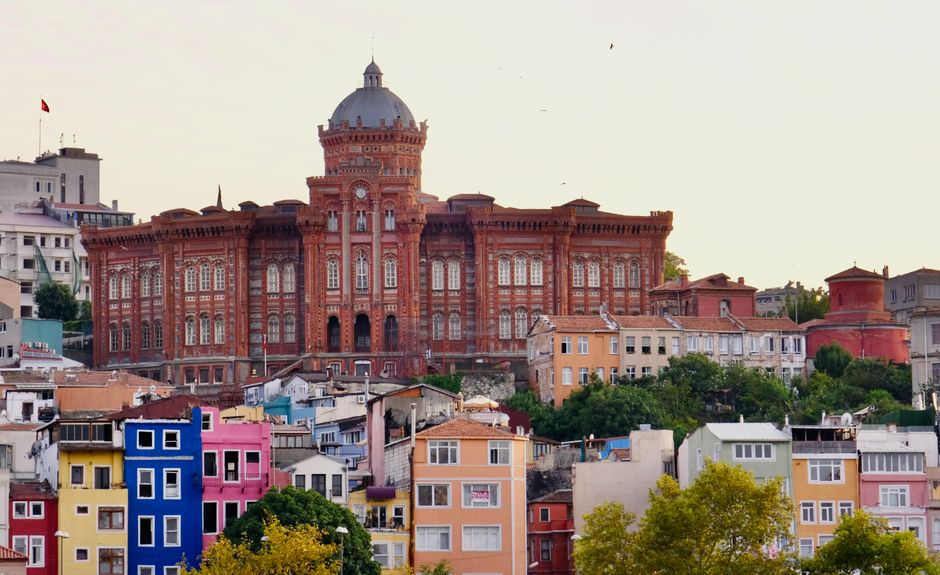
Walk down the narrow cobbled streets of Balat today, and you'll find something unexpected: a community centre bustling with activity on a Monday morning. But this wasn't always the case. The Balat Mahalle Kültür Merkezi, tucked between weathered Ottoman townhouses on Çukur Caddesi, had been effectively closed for nearly four years—a casualty of the municipality's shifting priorities and budget constraints that left dozens of Istanbul's oldest neighbourhoods without adequate social infrastructure.
The decline began in 2018, when the Istanbul Metropolitan Municipality restructured youth and community services, consolidating funding toward newly developed areas on the city's periphery. Balat, Fener, and Kuzguncuk—neighbourhoods home to approximately 180,000 residents, many of them elderly or economically disadvantaged—saw their allocated resources shrink by nearly 40 percent. Community centres that had operated continuously since the 1980s suddenly found themselves operating at skeleton capacity or closing entirely.
"We watched teenagers with nowhere to go, elderly residents isolated in their apartments," recalls Hakan Öztürk, coordinator of the Balat Neighbourhood Initiative, an informal collective that began meeting in 2022. What started as concerned residents gathering in a local kahvehane evolved into something more structured: a self-organised network that would eventually negotiate the reopening of municipal facilities and secure partial funding through district council grants.
The turnaround wasn't overnight. Between 2022 and 2024, volunteers documented community needs through informal surveys. They mapped the neighbourhoods—Balat, Fener, and Çarşamba—identifying 340 residents over 70 living alone, and approximately 120 young people aged 14-20 with limited access to after-school programming. The data proved compelling when presented to district officials.
Today, three neighbourhood centres operate on reduced but sustainable budgets: the Balat facility offers Turkish language classes to Syrian refugees and computer literacy programmes; Fener's centre hosts homework support for students whose families lack home internet access; and Kuzguncuk runs evening cooking and craft workshops that have become community gathering points.
The recovery reveals a critical lesson in how Istanbul's oldest quarters—long overshadowed by development-focused urban planning—are reclaiming agency through grassroots organising. While municipal funding remains modest, averaging 450,000 lira annually per centre, the model demonstrates that decline isn't inevitable. It requires attention, documentation, and residents who refuse to let their neighbourhoods fade.
This article was compiled by AI from the sources linked above and screened before publishing. See our editorial standards.