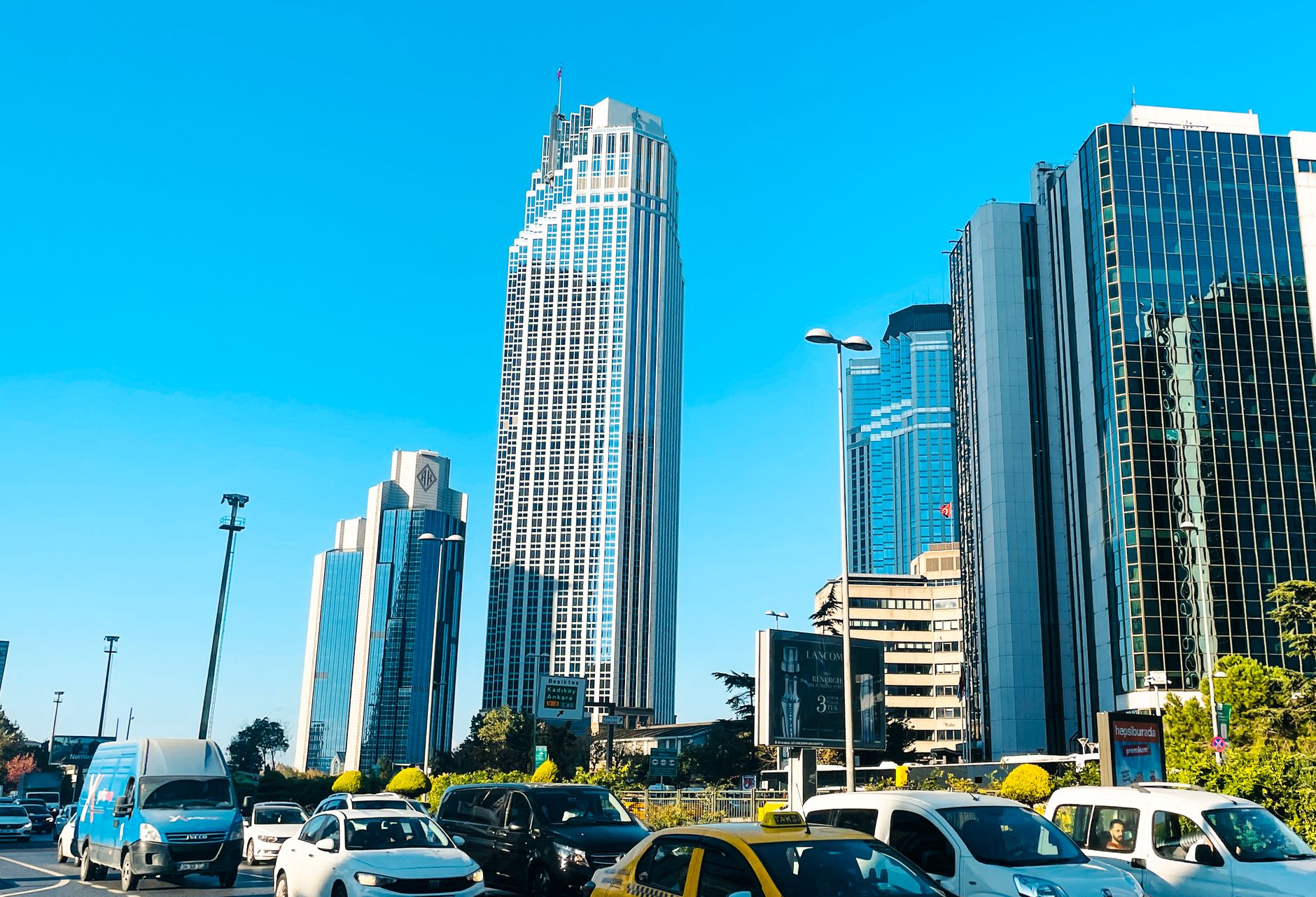
Istanbul's business district is experiencing a peculiar moment of tension. While the Borsa Istanbul has shown modest gains over the past eighteen months, the underlying currents tell a more complex story that should concern anyone with significant exposure in the city's commercial corridors—from Levent's gleaming office towers to the sprawling logistics hubs in Gebze.
Currency fluctuations remain the elephant in every boardroom. The Turkish lira's volatility continues to create headwinds for import-dependent businesses, particularly those in manufacturing and wholesale distribution. Companies sourcing materials from Europe or Asia face margin compression that no amount of operational efficiency can fully offset. Simultaneously, export-oriented firms enjoy unexpected tailwinds, making sectoral performance increasingly divergent. This divergence is reflected in commercial real estate: premium office space in Maslak commands premium prices, yet secondary markets in Ataşehir and Şirthane are seeing cooling demand.
The cost-of-living pinch reverberates through operational expenses. Hospitality venues around Sultanahmet and Beyoğlu report labor cost inflation exceeding 20% year-over-year, driven partly by tourism recovery expectations but also by broader wage pressures. Logistics companies operating from the Tuzla and Pendik industrial zones face soaring fuel and transportation costs that are only partially recoverable through pricing adjustments. Retail operators on İstiklal Caddesi and in Zorlu Center note that foot traffic has recovered, but conversion rates remain below 2019 benchmarks.
Real estate represents the sector most visibly recalibrating. Residential property prices in premium neighborhoods like Ortaköy and Beşiktaş have plateaued after years of appreciation, while micro-unit apartments in up-and-coming areas like Avcılar attract investors seeking yield over capital appreciation. Commercial landlords are increasingly offering flexible terms to retain tenants, a shift unthinkable two years ago.
What should businesses do now? First, stress-test currency exposure ruthlessly. Second, reassess labor economics—automation investments may prove more attractive than wage negotiations. Third, diversify customer bases geographically; over-reliance on domestic demand exposes firms to local economic volatility. Finally, monitor sectoral fundamentals closely: tourism-dependent businesses face tailwinds, but traditional retail and office space face structural headwinds.
The window for strategic repositioning is narrowing. Companies that act decisively in the next two quarters—adjusting pricing, renegotiating supplier contracts, or reallocating capital—will be better positioned than those waiting for clarity that may not arrive quickly. In Istanbul's competitive landscape, adaptation isn't optional.
This article was compiled by AI and screened before publishing. See our editorial standards.