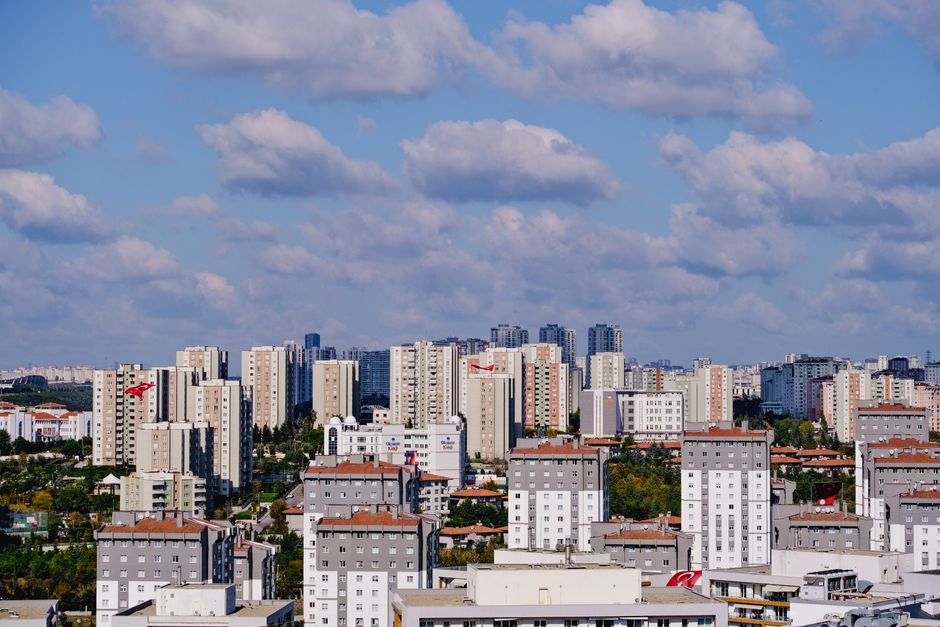
Buy, don't rent. That advice, long dismissed as the province of property salespeople, is now backed by cold arithmetic in several of Istanbul's outer suburbs. Monthly mortgage repayments on a standard 90-square-metre flat in districts including Esenyurt, Başakşehir, and Sultangazi are running below prevailing rental prices for equivalent units — a reversal that analysts at Istanbul-based consultancy Reidin tracked through the first half of 2026.
The shift matters because Istanbul's rental market has been ferocious. Since early 2024, average rents citywide climbed more than 60 percent in lira terms. The Central Bank of Turkey's gradual easing cycle, which brought the policy rate down from 50 percent to 35 percent by June 2026, has pulled mortgage rates along with it — slowly, but enough to crack open a window for buyers who have been sitting on the sidelines. Meanwhile landlords, still pricing in yesterday's inflation expectations, have pushed rents to levels that now exceed what a borrower would pay each month on a freshly originated loan.
Where the Numbers Flip
Esenyurt is the clearest example. A 90-square-metre, two-bedroom apartment on Fatih Caddesi in the district's Tahtakale neighbourhood lists for roughly 28,000 lira a month to rent. The same unit, priced around 3.2 million lira on the sales market, would generate a monthly mortgage payment of approximately 24,500 lira on a 20-year loan at 38 percent annual interest with a 30 percent down payment — saving the buyer close to 3,500 lira every month from day one. Başakşehir tells a similar story, particularly in the Kayaşehir blocks clustered around the Metrobüs corridor on the E-80. There, rental premiums over equivalent mortgage costs have reached 12 to 15 percent on stock built after 2018.
Sultangazi, historically one of the city's most overlooked residential zones, has emerged as perhaps the most dramatic case. Average asking prices in the district sit near 18,500 lira per square metre — well below Istanbul's citywide average of roughly 40,000 lira per square metre in mid-2026. Yet rents there have tracked the city average more closely, creating a valuation gap that a mortgage can exploit. Listings aggregated by Sahibinden.com show two-bedroom units in Sultangazi's Uğur Mumcu neighbourhood renting for 22,000 to 25,000 lira, while comparable purchase prices imply monthly financing costs closer to 18,000 lira.
The Turkish government's Emlak Katılım home financing scheme, restructured in late 2025 to extend maximum loan tenors to 25 years for first-time buyers, has further compressed monthly obligations. Applicants who qualify — the scheme targets buyers purchasing below 5 million lira — benefit from profit-share rates that lag commercial banks by roughly 4 percentage points. That alone closes the gap in neighbourhoods where the math was still borderline at commercial rates.
What Buyers Should Do Now
The window is real but not permanent. Property economists at Istanbul Technical University's urban planning faculty have modelled scenarios in which a second wave of rental normalisation — landlords eventually repricing downward as tenant affordability breaks — could narrow the arbitrage within 18 months. At the same time, any resumption of Central Bank tightening would push mortgage rates back up and close the gap from the other direction.
Practical steps for prospective buyers are straightforward. Prioritise Tapu Kadastro registry checks before committing — title disputes remain common in faster-developing western suburbs. Run loan pre-approvals through at least three institutions, including Ziraat Bankası and VakıfBank, both of which are participating Emlak Katılım partners. Focus searches on districts with confirmed metro extensions: the planned Gayrettepe–Esenyurt line, projected to open in stages from 2028, will likely reprice Esenyurt upward before the end of the decade, compressing the buy-versus-rent gap further.
For renters who have spent the past two years watching their housing costs sprint ahead of their salaries, the affordability flip in Istanbul's western and northern suburbs offers a concrete exit. The numbers, for once, are pointing toward ownership.