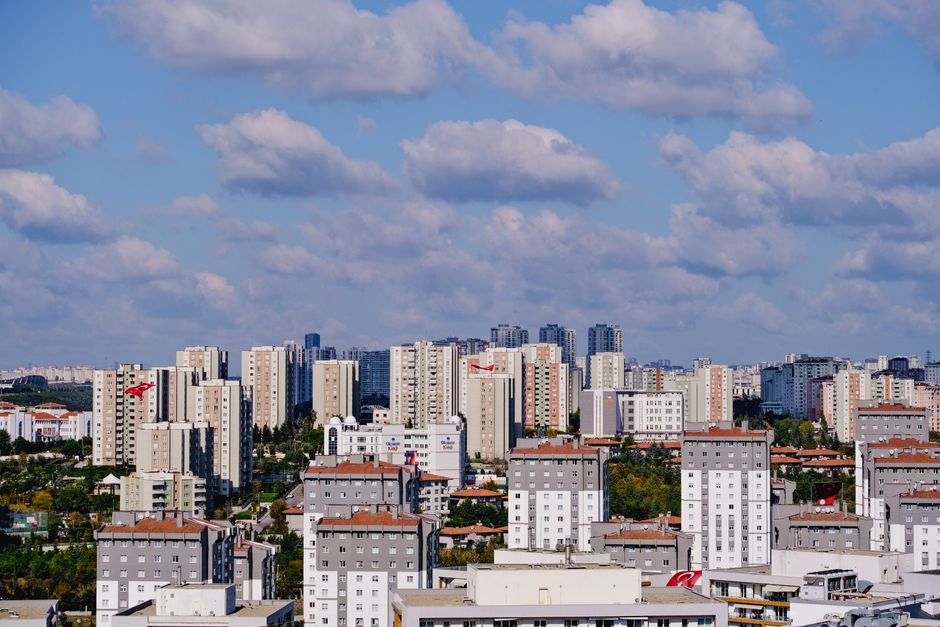
Istanbul's municipal planning authority approved a revised zoning framework for Kağıthane district in late June, greenlighting mixed-use development corridors along the Kağıthane Stream valley and raising permissible floor-area ratios in designated blocks for the first time since 2019. The decision landed quietly, but brokers working the northern European side of the city say their phones have not stopped since.
The timing is not accidental. Turkey's Ministry of Environment, Urbanisation and Climate Change has been pushing local municipalities to densify transit corridors ahead of Istanbul's next metro expansion wave, which includes the M11 Gayrettepe–Sabiha Gökçen line and the contentious M16 Kağıthane–Atatürk Airport spur. When planning permissions and metro timelines converge in the same postcode, the market tends to move fast — and sometimes recklessly.
Kağıthane's Quiet Transformation
Five years ago, Kağıthane was the district people drove through to get somewhere else. The neighbourhood of Çağlayan, home to Istanbul's sprawling new courthouse complex — the largest in Europe when it opened — brought foot traffic and some office demand, but residential development remained patchy. The new zoning framework changes that calculus. Parcels along Halit Ziya Uşaklıgil Caddesi that previously permitted eight-storey residential blocks can now go to fourteen floors under certain mixed-use conditions, provided developers include ground-floor retail and meet the municipality's revised green-space requirements.
Current asking prices in Kağıthane average around $1,850 per square metre — roughly 26 percent below the city-wide benchmark and less than half the premium commanded in neighbouring Şişli's Fulya quarter. That gap is precisely what is attracting the citizenship-by-investment crowd, who need to clear a $400,000 minimum property value to qualify under Turkey's programme. A two-bedroom unit in a newly launched Kağıthane project can hit that threshold at roughly 215 square metres — feasible, but tighter than in Beylikdüzü or Esenyurt, where larger footprints have historically dominated the CBI trade.
On the Asian side, the story is different but equally policy-driven. Ümraniye's local plan, updated by the İBB — Istanbul Metropolitan Municipality — in April, designated the Alemdağ Caddesi corridor as a priority development zone, channelling infrastructure spending toward road-widening, fibre-optic rollout and a new tram link connecting the district to the existing M7 metro at Dudullu. Buyers who positioned in Ümraniye's Çakmak neighbourhood between 2022 and 2024, when prices sat around $1,200 per square metre, are now looking at valuations closer to $1,650 — a 37 percent nominal gain in under two years, though lira depreciation complicates the dollar-denominated picture for local buyers.
Reading the Risk Alongside the Return
Not every planning decision delivers what it promises. Başakşehir was marketed aggressively to Gulf investors through 2021 and 2022 on the back of its proximity to the new Istanbul Airport and a cluster of health-tourism hospitals on the Mahmutbey axis. Liquidity in that market has since thinned. Secondary-market transactions in Başakşehir fell roughly 18 percent in volume during the first quarter of 2026 compared with the same period in 2025, according to figures circulated by the Turkish Statistical Institute in May. The lesson repeated by property lawyers at firms including ones operating out of Levent's financial district: planning permission and actual infrastructure delivery are not the same event, and the gap between them can run to a decade.
For buyers weighing entry now, the practical arithmetic favours districts where at least one piece of enabling infrastructure — a metro station, a zoning uplift, a government anchor tenant — is already physically present rather than merely announced. Kağıthane's courthouse is built. The M3 metro stop at Çağlayan is operational. The new zoning is signed. That three-factor alignment is relatively rare in a city of 16 million where ambitious plans have a long history of stalling at the financing stage. Buyers working with licensed real-estate consultants registered with Istanbul's Chamber of Commerce should pull the tapu records and check whether the specific parcel they are buying into sits inside the newly zoned corridor — or just adjacent to it. That boundary, in some streets, is a single block wide, and it matters enormously to future resale value.