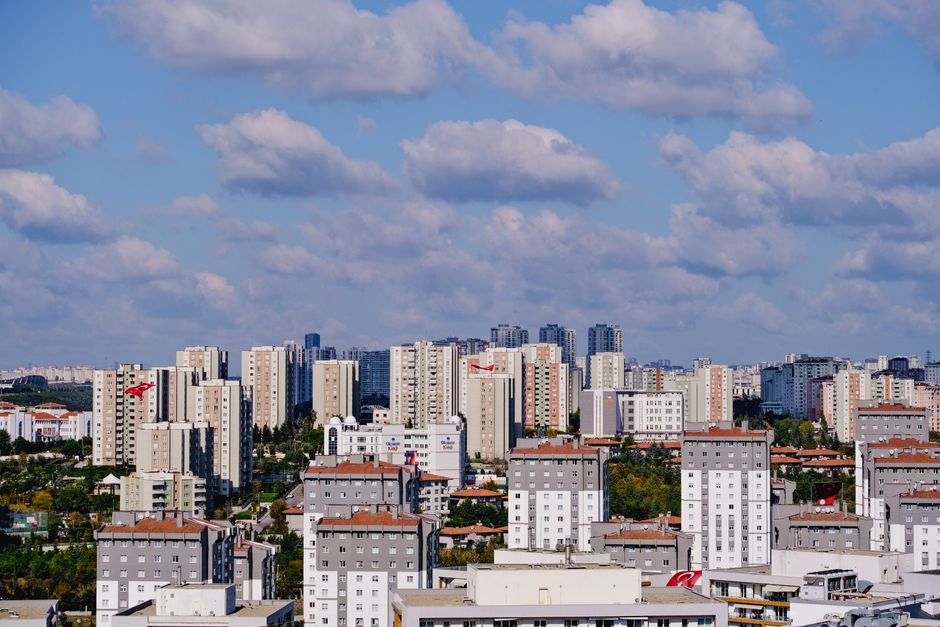
Istanbul's rental market crossed a painful threshold in early 2026: the average monthly rent for a two-bedroom flat in Beşiktaş now runs between 45,000 and 55,000 Turkish lira, roughly $1,400 at current exchange rates, while the same property would cost a buyer approximately $420,000 at the city's average of $2,500 per square metre. For most Istanbul households, the purchase price is simply not in play. That widening gap is what is pulling build-to-rent — purpose-built, institutionally owned rental stock — out of the margins and into serious developer conversation.
The timing matters. Turkey's central bank held its policy rate at 42.5 percent through most of the first half of 2026, keeping mortgage costs prohibitive for ordinary earners. Inflation may be easing off its 2024 peaks, but real wage growth has not kept pace with property values in high-demand districts. Renting is not a lifestyle choice for most Istanbulites — it is the only arithmetic that works. Build-to-rent developers are betting that tenants stuck in this position will pay a modest premium for something the fragmented private landlord market rarely delivers: predictable rents, professional maintenance and legal security.
What the New Schemes Actually Offer
The most closely watched project in the sector right now is a 340-unit complex under development near Levent metro station on the European side, backed by a joint venture between a domestic real estate investment trust and a Gulf-based fund. The scheme, expected to open in phases from late 2027, is designed around fixed annual rent increases tied to a capped multiplier rather than the open-ended inflation adjustments that have made landlord-tenant relations so volatile since Turkey's rent control legislation expired in 2024. Residents will also get on-site property management, rapid repair response and the ability to sign three-year contracts — a rarity in Istanbul's one-year-dominant rental culture.
On the Asian side, a smaller pilot launched in Kadıköy's Moda neighbourhood in 2025 by Emlak Konut, the state-backed housing developer, has been running at 96 percent occupancy since the first quarter of this year. The Moda scheme charges roughly 38,000 lira per month for a 75-square-metre unit — slightly above comparable private rentals on Moda Caddesi — but tenants report that the management fee covers internet, communal cleaning and 24-hour concierge, which changes the net cost calculation. Emlak Konut plans to replicate the format in Şişli by the third quarter of 2026, with 180 units targeting young professionals priced out of ownership in the Halaskargazi corridor.
The Honest Case for Buying, and When Renting Wins
The numbers do not uniformly favour renting. A buyer who purchased a 100-square-metre flat in Beyoğlu for $250,000 in January 2022 has seen nominal lira-denominated value roughly triple, though dollar-adjusted gains are more modest. Foreign buyers using Turkey's citizenship-by-investment programme — which requires a minimum $400,000 property purchase — have continued to absorb prime stock in Beşiktaş and along the Bosphorus waterfront, pushing entry prices further out of reach for local first-time buyers and tightening available rental supply simultaneously.
For a household earning the Istanbul median of around 35,000 lira per month, neither option is comfortable. Standard mortgage repayments on even a modest flat in Bağcılar — one of the city's more affordable European-side districts — would consume well over 70 percent of gross income at current lending rates. Build-to-rent, at its current price points, serves middle-to-upper-middle earners rather than the city's most squeezed households. Developers acknowledge the gap and are in discussions with the Ministry of Environment, Urbanisation and Climate Change about subsidy frameworks that could bring rents down to 25,000-to-30,000 lira tiers.
Prospective tenants weighing build-to-rent should push hard on two specifics before signing: the exact rent-review formula written into the contract, and whether the management company is registered with TÜRKSAT's property management certification scheme, a relatively new standard that filters out operators with poor maintenance records. The sector is young enough that some projects are marketing the concept more fluently than they are delivering it. Viewing an occupied phase, not just a showroom, remains the most useful due diligence any Istanbul renter can do in 2026.