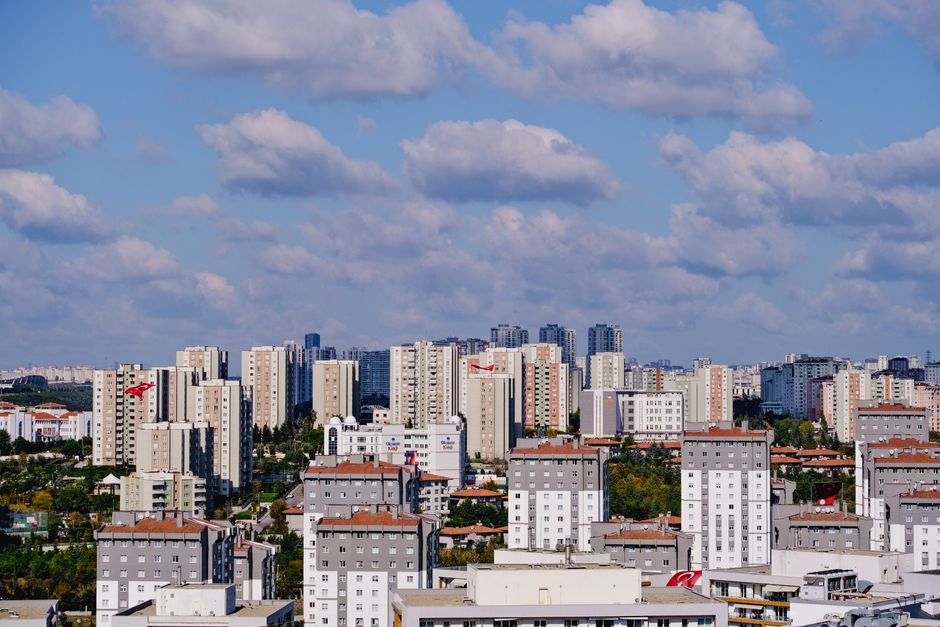
Construction approvals in Istanbul jumped 18 percent year-on-year in the first quarter of 2026, according to data from the Istanbul Metropolitan Municipality's urban planning directorate — and developers are moving fast to translate those permits into tower cranes. For investors tracking returns rather than skylines, the timing matters. New-build units completed in 2025 and entering the rental pool this summer are already producing gross yields that older stock simply cannot match.
The context is straightforward. The Turkish lira's relative stabilisation since late 2024, combined with persistent dollar- and euro-denominated demand from citizenship-by-investment buyers, has created a two-speed market. Foreign buyers must spend a minimum of $400,000 on Turkish real estate to qualify for citizenship, a threshold raised from $250,000 in 2022. That floor has effectively sorted the market: below it sits domestic stock; above it, a sharply competitive band of new developments explicitly designed around international capital. Rental income in many prime buildings is now priced and paid in dollars, insulating landlords from lira volatility.
Where the Yields Are Landing
The strongest returns right now are not coming from the usual suspects. Beşiktaş and Beyoğlu remain prestige addresses — average asking prices on İstiklal Caddesi-adjacent apartments regularly top $3,800 per square metre — but gross yields there have compressed to roughly 4–5 percent because purchase prices ran so far ahead of rents. The better yield story in mid-2026 is playing out in Şişli and, particularly, Kağıthane, where the extended M7 metro line has made previously overlooked neighbourhoods genuinely commutable. New-build units in Kağıthane are transacting at $2,100–$2,400 per square metre while commanding monthly rents of $18–$22 per square metre, putting gross yields in the 8–9 percent range. Net, after building management fees and the annual Emlak Vergisi property tax, investors are reporting 6.5–7.5 percent — still well above what comparable square footage fetches in Madrid or Warsaw right now.
On the Asian side, Kadıköy and the Fikirtepe urban renewal zone tell a more nuanced story. Fikirtepe's long-delayed regeneration — a project that has consumed more than a decade of planning disputes — is finally delivering finished towers. TOKİ, the state housing authority, has co-signed several of the approvals, which gives some buyers comfort on completion risk. Prices in Fikirtepe's newest blocks sit around $2,200 per square metre, and proximity to the Kadıköy transport hub is pulling short-term rental demand. Airbnb-style returns in that pocket are being quoted by agents at 10–12 percent gross, though Istanbul's municipal short-let licensing rules, tightened in March 2025, mean not every unit qualifies.
What the Approval Pipeline Signals for 2027
The municipal approval data points to supply pressure building over the next 18 months. Roughly 14,000 new residential units received construction permits in Istanbul in Q1 2026 alone, with Beylikdüzü, Başakşehir and Ataşehir accounting for the largest share. Beylikdüzü in particular — long marketed as Istanbul's most affordable European-side district — is absorbing significant domestic demand, which could soften rental upside if inventory arrives faster than the population base grows. Investors targeting yield rather than capital growth should probably avoid chasing the cheapest entry prices at the city's western fringe and focus instead on transit-connected mid-market neighbourhoods where rental demand is structural rather than speculative.
The practical upshot for anyone moving capital into Istanbul new-builds before the end of 2026: prioritise projects with occupancy certificates already issued or projected within six months, verify that the development sits within a licensed short-let zone if short-term rentals are part of the return model, and stress-test the yield calculation at 85 percent occupancy rather than the 95 percent figures developers habitually cite in their sales materials. Gross yields of 7–9 percent in Kağıthane or central Kadıköy are real — but they require active management and a clear-eyed read of the approval pipeline that is about to deliver a lot more competition to the market.