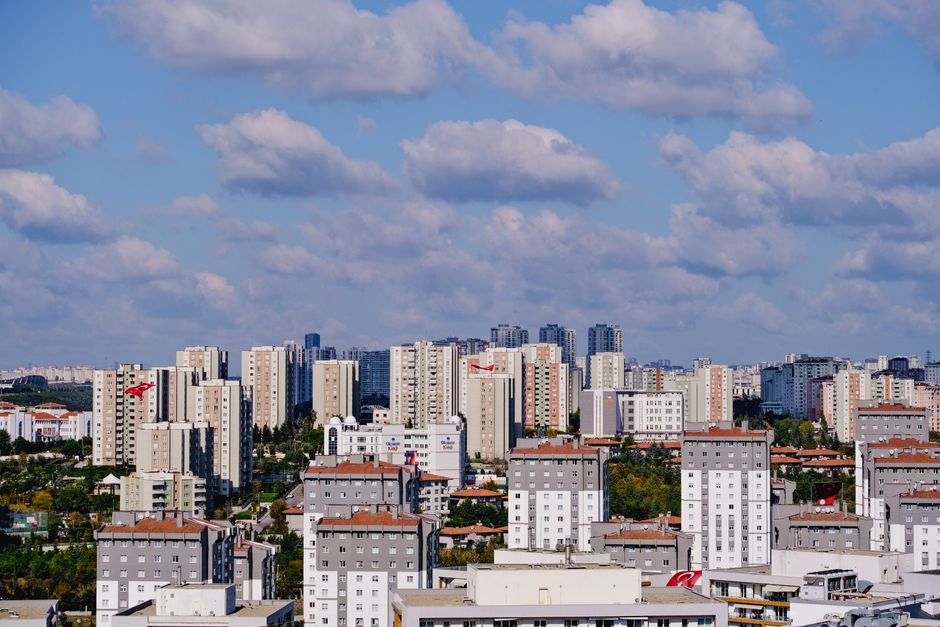
Küçükçekmece Is the Growth Corridor Istanbul Investors Are Quietly Buying Into
New metro infrastructure and a major urban transformation project are pushing property prices in this western district up faster than almost anywhere else in the city.
New metro infrastructure and a major urban transformation project are pushing property prices in this western district up faster than almost anywhere else in the city.
Apartment sales in Küçükçekmece rose 34 percent year-on-year in the first quarter of 2026, outpacing Şişli, Beşiktaş and every district on the Asian side including Kadıköy, according to Istanbul Metropolitan Municipality transaction data. The driver is not a mystery: the Gayrettepe–Istanbul Airport metro line, M11, now carries passengers through the district's northern edge, and a second corridor — the M12 extension connecting Halkalı to Kirazlı — is slated to open fully by the end of this year.
That combination of completed and imminent rail access is doing exactly what infrastructure does to real estate. Prices that sat around $1,800 per square metre in the Cennet and Tevfikbey neighbourhoods as recently as late 2024 are now trading at $2,200 to $2,400 per square metre for new-build stock, agents at Remax Turkey's Küçükçekmece branch confirmed in written responses to questions this week. That still puts the district roughly 15 to 20 percent below the city's current average of $2,500 per square metre — a gap that investors are treating as runway rather than a red flag.
The district sits on Istanbul's European side, roughly 20 kilometres west of Taksim Square, straddling the E-5 highway and pressed against the lake that shares its name. For years it was shorthand for peripheral, industrial, overlooked. The Halkalı commuter rail line gave it one connection to the city's core, but the journey was slow and transfers were clumsy. What changed everything was the government's decision to route the M11 — the airport express that opened in 2023 — along a corridor that clipped Küçükçekmece's northern neighbourhoods before continuing toward Bağcılar.
Istanbul's broader urban transformation programme, Kentsel Dönüşüm, has also been active here. The Housing Development Administration of Turkey, known as TOKİ, is midway through a multi-phase redevelopment of roughly 6,200 earthquake-vulnerable units in the Yarımburgaz and Atakent areas, replacing low-rise informal stock with mid-rise certified buildings. That programme has two effects: it clears structural risk from the portfolio of anyone buying new-build, and it signals sustained public investment in an area that the private sector uses as a confidence indicator.
Foreign buyers have registered particular interest since early 2025. Küçükçekmece is among the districts where the Turkish citizenship-by-investment threshold — currently set at $400,000 for a single property — can be met with a spacious three-bedroom unit in a project with a pool and concierge, something that costs considerably more in Beşiktaş or along the Bosphorus waterfront. The Emlak Konut GYO–developed Marmara Evleri complex, located near the lake shore on Kanarya Caddesi, has seen a notable uptick in inquiries from Gulf and Eastern European buyers over the past six months.
TÜİK, Turkey's statistical agency, recorded Küçükçekmece as the third-highest volume district for total property sales in Istanbul in 2025, behind only Esenyurt and Bahçelievler. That volume matters because it reflects liquidity — investors can enter and exit without hunting for a buyer for eighteen months. Rental yields in the district are running between 5.5 and 6.8 percent annually on new-build stock, above the city-wide average of roughly 4.8 percent, according to Endeksa property analytics data from June 2026.
The lake itself, Küçükçekmece Gölü, is a planning consideration as much as an amenity. Zoning restrictions prevent high-density construction on a significant strip of the western shore, which caps supply even as demand grows. Developers who secured permits before the latest revision to the Istanbul Metropolitan Municipality zoning plan in March 2025 are therefore sitting on a constrained asset.
For buyers considering the district, the practical advice from agents and analysts is consistent: prioritise projects within 800 metres of a confirmed M11 or M12 station entrance, verify earthquake compliance certification under the 2018 building code, and act before the M12's full opening is priced in. That pricing event, based on what happened to values around the Gayrettepe and Kağıthane stops when M11 opened, could add another 10 to 15 percent within twelve months of the ribbon-cutting.
How does this story make you feel?
Spread the word
About this article
Published by The Daily Istanbul
Daily brief
Free, in your inbox before 7am. Weekdays.
More in Property