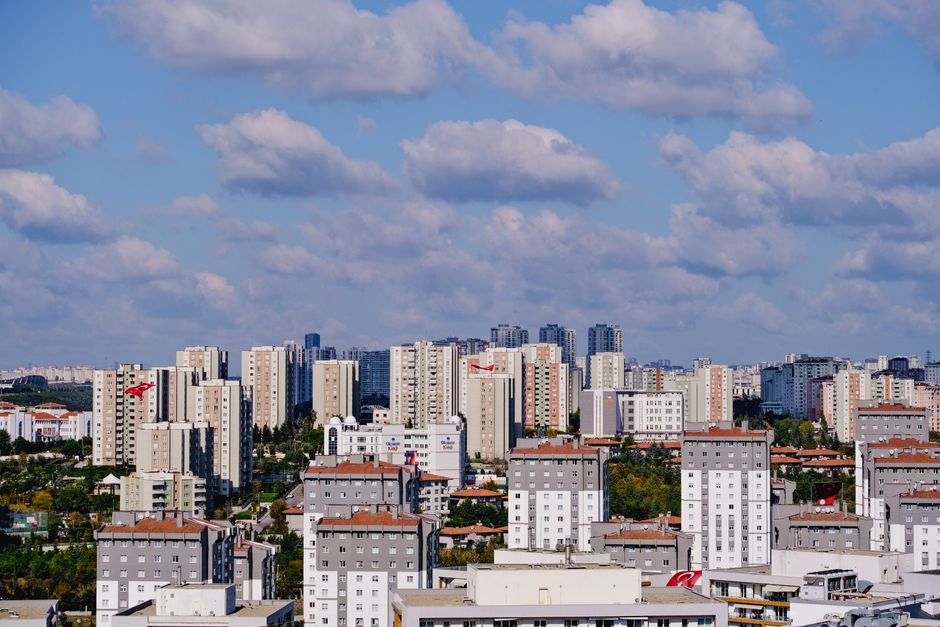
Istanbul's residential market entered the second half of 2026 with a stubborn fact attached to it: first-time buyers who skip the neighbourhood research and chase the headline price almost always overpay. The city's average sits around $2,500 per square metre, but that number is essentially meaningless on its own. In Beşiktaş, you will pay closer to $4,800. In parts of Bağcılar on the European side, you can still find completed stock at $1,100. The gap tells you everything about how segmented this market has become.
Why does this matter right now, in July 2026? Two reasons. First, the Turkish government's citizenship-by-investment threshold — pegged at $400,000 since its 2022 revision — continues to funnel Middle Eastern and Central Asian capital into premium districts, compressing supply and inflating prices in Beyoğlu, Şişli and along the Bosphorus waterfront. Second, the lira's relative stabilisation over the past eight months has brought a new cohort of domestic first-timers back to the table after years on the sidelines. These two groups are now competing for the same finite stock, and domestic buyers, who typically cannot match dollar-denominated offers, are the ones being squeezed.
Where the Value Actually Is
Kadıköy, on the Asian side, remains the clearest entry point for a first-time buyer with a mid-range budget. Prices on Moda Caddesi and the streets running toward Fenerbahçe Park average between $2,800 and $3,200 per square metre for resale stock in reasonable condition — above the city average, yes, but the rental yields here run at roughly 5.5 to 6 percent annually, which is among the strongest of any established neighbourhood. The district's transport links, particularly the Marmaray connection at Ayrılıkçeşme station, have made it a genuine alternative to the European side without the premium that comes with a Beşiktaş postcode.
Şişli deserves more attention than it gets. The neighbourhood around Bomonti — specifically the streets between Talatpaşa Bulvarı and the old Bomonti Bira brewery complex, which has been redeveloped into a mixed-use hub — has seen consistent price appreciation of around 18 percent in dollar terms over the past 24 months, according to data compiled by Endeksa, the Turkish real estate analytics platform. New-build stock in Bomonti is selling at $3,400 to $3,900 per square metre, but buyers willing to take on a 1990s-era apartment needing renovation can still enter at $2,600, renovate for an additional $300 to $400 per square metre, and end up well below the neighbourhood's trajectory ceiling.
Avoid the trap of Başakşehir. Several developers pushed aggressively marketed projects there between 2020 and 2023, promising infrastructure that has not arrived on schedule. Resale liquidity in that district remains thin, and first-timers who bought off-plan at launch prices are still waiting on title deeds in some cases.
What First-Timers Need to Do Before They Sign Anything
The practical checklist is not complicated, but a surprising number of buyers skip it. Pull the tapu — the title deed — before you commit to anything beyond a preliminary letter of intent. Check for any ipotek, the mortgage encumbrance, registered against the property. The Tapu ve Kadastro Genel Müdürlüğü, the land registry authority, offers an online query tool called TAKBİS that any buyer can access with a valid identification number.
Engage a licensed real estate appraiser — an SPK-licensed değerleme uzmanı — rather than relying solely on the estate agent's valuation. The cost is typically between 3,000 and 6,000 Turkish lira for a standard residential property and it is the single best money you will spend. Several firms operate across both the European and Asian sides, including the Istanbul offices of Reel Değerleme and TSKB Gayrimenkul Değerleme.
Finally, budget for the full transaction cost, not just the purchase price. Stamp duty runs at 4 percent of the declared sale value, split between buyer and seller by convention though not always in practice, and the notary and land registry fees add another half a percent. First-timers consistently underestimate this and find themselves short at the closing table. Know the number before you agree to a date.