Istanbul auction prices signal shift in developer focus
Mixed signals from project sales and secondary markets are reshaping which neighbourhoods attract investment—and which will stall.
Mixed signals from project sales and secondary markets are reshaping which neighbourhoods attract investment—and which will stall.
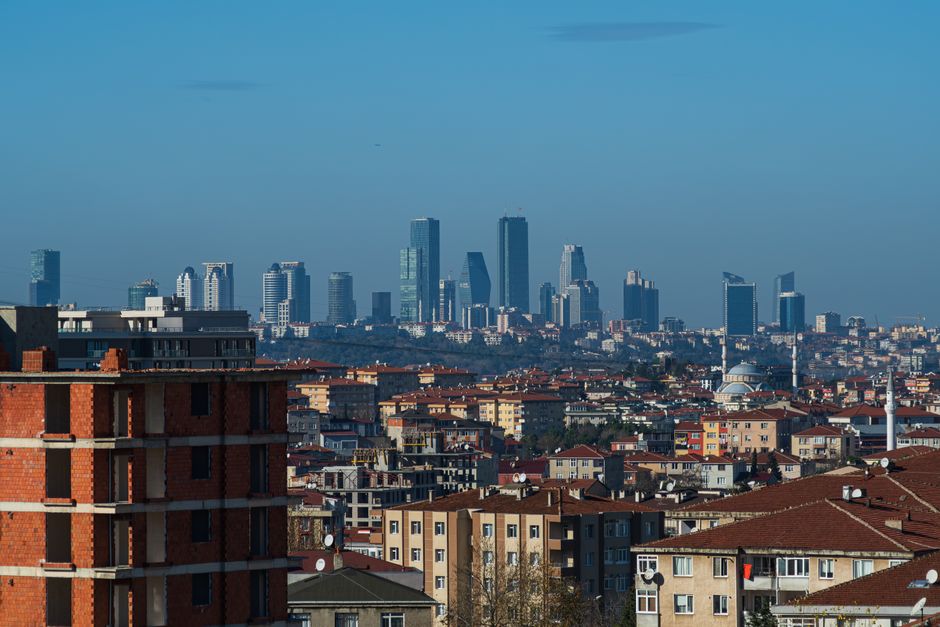
Istanbul's property market is sending mixed signals to developers eyeing the next wave of approvals, and the answer lies less in official announcements than in what actually sells, and at what price.
Over the past eighteen months, secondary-market auction results have become an unlikely guide to future construction. When a 120-square-metre apartment in Sisli's mid-rise stock moves at 3.2 million USD last autumn—well above the street's historical average—it signals confidence that exceeds what planners see in permit applications. Yet in parallel, developer-held inventory in Beyoglu's Cihangir precinct has languished, with several off-plan projects extended by up to two years. The contradiction matters: it tells us where capital is actually flowing versus where hopeful pipelines sit.
The citizenship-by-investment mechanism continues to inflate foreign demand, particularly for trophy assets along the Bosphorus and in premium Besiktas corridors where per-square-metre prices now regularly exceed 4,000 USD. But auction data from the past six months reveals a sharp divergence. While new-build off-plan sales in Sisli and Kadikoy have maintained momentum—averaging 2,800–3,100 USD per square metre—the secondary resale market shows buyers are increasingly selective about location granularity. A unit on Valikonagi Caddesi commands a premium; two blocks inland, prices soften noticeably. That spatial precision is making developers more cautious about sprawling suburban approvals in outer Avcılar or Bahcesehir, where cost-to-completion ratios no longer pencil out at pre-2024 pricing expectations.
Municipal approvals in central nodes—Taksim, Galata, Beşiktaş waterfront—remain robust, with the Istanbul Metropolitan Municipality processing commercial-mixed-use permits at near-historical highs. Yet the volume of filed applications for purely residential towers in secondary zones has dropped an estimated 23 per cent year-on-year, according to sector tracking. Developers are plainly reading the auction outcomes as a warning: sprawl is out; density in proven precincts is in.
The Turkish Central Bank's recent rate-hold stance, while welcomed by borrowers, has also prompted reassessment. Construction financing costs remain elevated relative to 2021–22 baselines, making per-unit project viability tighter. Auction results showing sustained appetite for move-in-ready stock—particularly in Kadikoy's eastern-side neighbourhoods—are encouraging near-term completions over greenfield approvals.
By late 2026, the shape of Istanbul's new pipeline will largely mirror what the auction floors have already whispered: premium micro-locations trump suburban scale; and completion risk, now priced visibly into buyer offers, has made developers acutely conscious of timelines.
This article was compiled by AI from the sources linked above and screened before publishing. See our editorial standards.
How does this story make you feel?
Spread the word
About this article
Published by The Daily Istanbul
Daily brief
Free, in your inbox before 7am. Weekdays.
More in Property