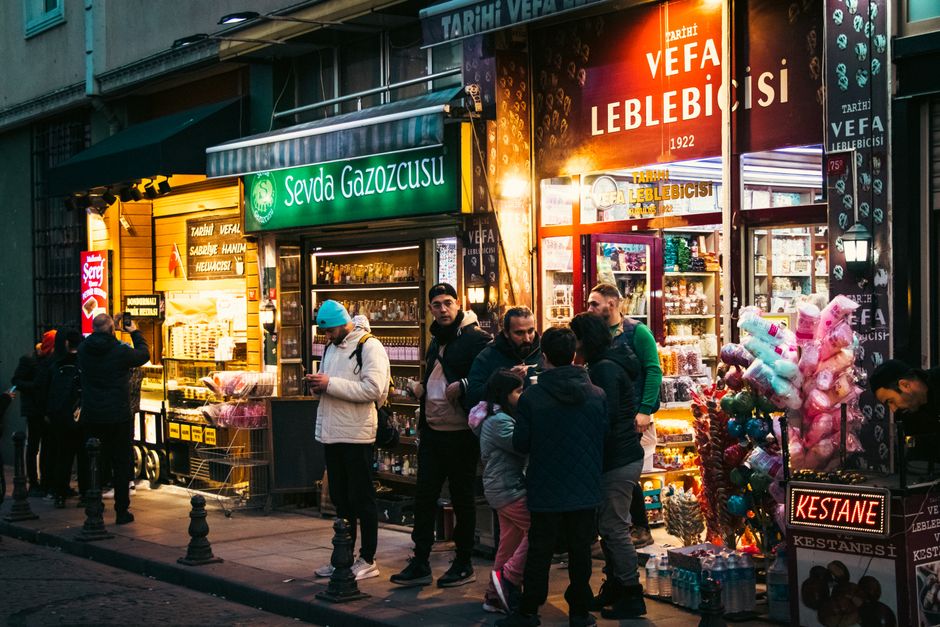
Walk down İstiklal Avenue on any given Thursday evening, and you'll notice something has shifted in Istanbul's gallery circuit. Conversations that once revolved around emerging painters and sculptors now pivot toward cryptocurrency, digital wallets, and the legitimacy of non-fungible tokens in fine art. The catalyst: three major gallery spaces on Meşelik Sokak have launched blockchain-integrated exhibition platforms in the past eight weeks, triggering the most vociferous debate the city's art world has experienced since the 2018 lira crisis disrupted the contemporary market.
Galerie Nev, a mid-sized venue in Cihangir that has operated for fifteen years, became the first to fully digitize its catalogue this spring, offering limited-edition digital certificates alongside physical works. The move proved controversial. Traditional collectors—many of whom inherited their taste from Istanbul's Ottoman-era appreciation for material craft—question whether digital ownership carries cultural weight. Yet younger artists and international buyers have responded enthusiastically; the gallery reported a 34% increase in transactions within six weeks, with approximately 60% originating from overseas bidders.
The phenomenon extends to institutional spaces. Pera Museum, while maintaining its classical exhibition programme, recently opened a dedicated digital gallery section on its website, partnering with blockchain developers to authenticate historical photography collections. Meanwhile, smaller independent spaces across Beyoğlu's warren of narrow streets—from Bomontiada's artist collectives to the emerging gallery clusters around Tophane—are grappling with whether to participate or resist. Some, like curator-led Project4 in Galata, have explicitly rejected tokenization as antithetical to their mission, framing it as financialization masquerading as innovation.
The timing feels distinctly local. Istanbul's position as a bridge between Europe and Asia, combined with Turkey's young demographic and growing fintech sector, has created fertile ground for this experiment. Gallery-goers—many in their late twenties and thirties—describe the shift as reflective of how they experience art itself: increasingly mediated through screens, internationally networked, and inseparable from questions of ownership and value.
What remains uncertain is staying power. Industry insiders predict consolidation: galleries that adapt thoughtfully will thrive, while those that over-commit to blockchain enthusiasm risk alienating core audiences. For now, Istanbul's art establishment watches itself wrestle with a question that transcends aesthetics: what does it mean to collect and preserve culture in an age of digital reproduction? The answer, emerging unevenly across Beyoğlu's sunlit facades, will likely define the city's artistic identity for the next decade.
This article was compiled by AI from the sources linked above and screened before publishing. See our editorial standards.