Istanbul's Tech Boom: Decoding the Capital Flows Reshaping Beyoğlu
As venture funding accelerates across Turkey's innovation district, investors and founders are learning to read the economic signals that separate hype from sustainable growth.
As venture funding accelerates across Turkey's innovation district, investors and founders are learning to read the economic signals that separate hype from sustainable growth.
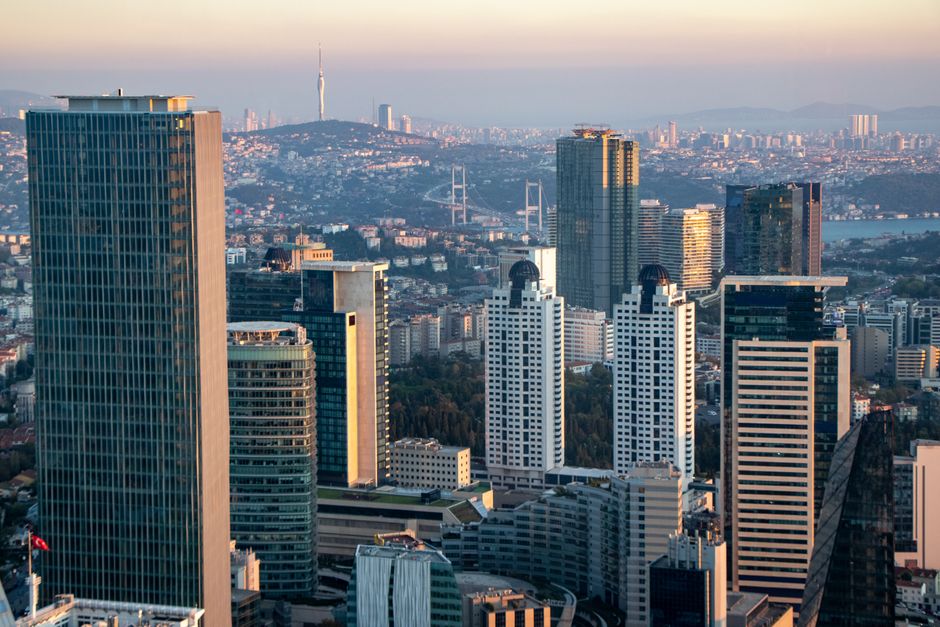
Istanbul's startup ecosystem is experiencing a tangible shift in investor confidence, reflected in both funding volumes and the geographical concentration of venture capital activity. The story of how money moves through the city's innovation corridors reveals much about where Turkish tech is heading.
The numbers tell a compelling picture. Turkey's venture capital market attracted approximately $1.2 billion across 2025, with Istanbul capturing roughly 70 percent of that capital. More significantly, the average ticket size for Series A rounds has climbed to $4-6 million, up from $2-3 million three years ago. This maturation signals investor conviction in founder teams navigating complex regional markets.
Beyoğlu's Karaköy district has become the epicentre of this activity. What was once primarily a heritage tourism neighbourhood is now dotted with venture offices, accelerator hubs, and co-working spaces clustered around İstiklal Caddesi and the waterfront. Monthly office rents in Karaköy for startup-sized teams now hover between 15,000-25,000 Turkish lira per 100 square metres—a 40 percent premium over suburban alternatives, but justified by proximity to investor networks and talent pools.
The shift in capital allocation reveals deeper economic dynamics. EdTech and fintech continue attracting the largest funding tranches, driven by Turkey's young, digitally-native population and underpenetration in financial services beyond major metropolitan areas. However, climate-tech and logistics automation—sectors addressing supply chain vulnerabilities that became acute during regional disruptions—are emerging as secondary investment clusters. This diversification reduces ecosystem dependency on consumer-focused apps.
Foreign investor participation has grown substantially. Approximately 45 percent of capital now originates outside Turkey, compared to 30 percent in 2023. European venture funds, particularly from Berlin and London, view Istanbul as a gateway to Middle Eastern and Central Asian markets. US-based funds see currency dynamics favourably: the lira's relative weakness makes Turkish engineering talent cost-effective for global product development.
Equally important is what the investment patterns *don't* show. Real estate tech—previously a darling sector—has contracted sharply, reflecting cooling property markets. This pruning, while painful for founders, indicates a maturing investor base moving beyond momentum-driven decisions.
For entrepreneurs monitoring these flows, the message is clear: capital availability remains robust, but selectivity is rising. Success increasingly depends on demonstrating unit economics and sustainable competitive advantages rather than user growth alone. The next phase of Istanbul's startup story will be written by founders who understand these shifting incentives.
This article was compiled by AI from the sources linked above and screened before publishing. See our editorial standards.
How does this story make you feel?
Spread the word
About this article
Published by The Daily Istanbul
Daily brief
Free, in your inbox before 7am. Weekdays.
More in Business