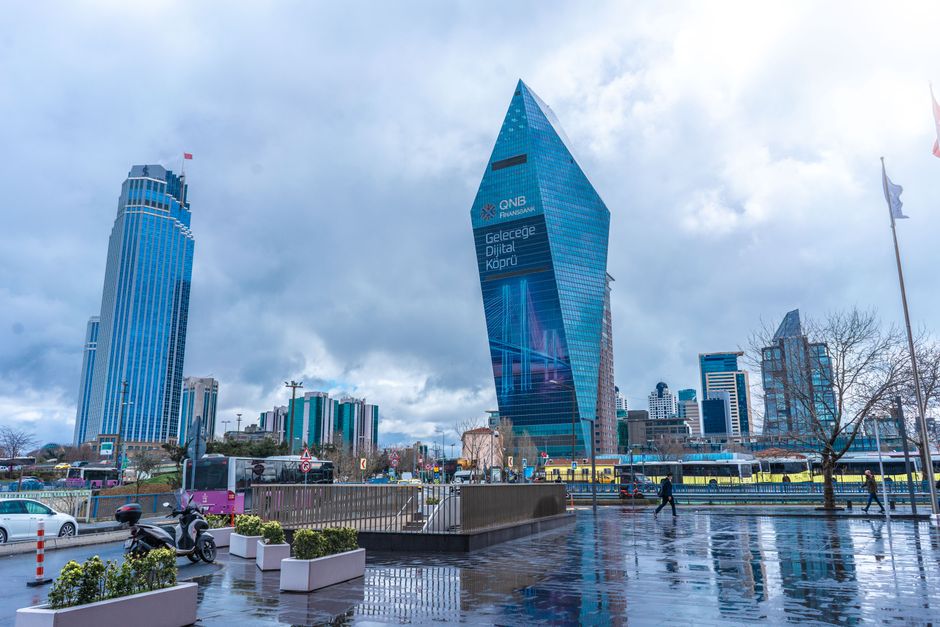
Istanbul's gleaming financial district—stretching from the glass towers of Levent to the sprawling corporate campuses of Maslak—is grappling with a convergence of economic pressures that have quietly reshaped the investment calculus for 2026.
The challenges are stark. Real estate valuations in prime business zones have climbed 18-22% year-on-year, pricing out mid-sized firms from establishing headquarters in traditionally coveted neighborhoods. Meanwhile, borrowing costs remain elevated. Banks operating out of the Istanbul Stock Exchange corridor are offering commercial lending rates between 28-32%, a reflection of persistent inflation concerns and currency depreciation that has seen the lira lose approximately 12% of its value against the dollar since January.
For ordinary Istanbulites navigating the cost of living, the pressure is equally acute. A modest two-bedroom apartment in Besiktas now commands rental prices of 45,000-55,000 lira monthly—roughly equivalent to a mid-level professional salary. Dining out in Nisantasi or Cihangir, once affordable leisure activities, now requires deliberate budgeting, with meals at mid-range establishments averaging 450-600 lira per person.
The broader investment climate reflects international tensions that have rippled through emerging markets. Geopolitical uncertainty in the Middle East and broader regional instability have made foreign direct investment skittish. Several multinational firms have delayed expansion plans in Turkey, citing risk assessments and capital reallocation toward more stable jurisdictions.
Turkish institutional investors and pension funds—traditionally anchors of the domestic market—are increasingly diversifying holdings abroad, seeking yield in less volatile environments. The Istanbul Stock Exchange's composite index has remained range-bound, with volatility spikes becoming more frequent rather than the exception.
Yet some adaptation is underway. Fintech firms clustered around Galata and emerging startup hubs are pivoting toward cost-conscious solutions: digital lending platforms, investment apps targeting retail investors with lower minimum thresholds, and blockchain-based remittance services capitalizing on diaspora connections. These ventures face their own headwinds—regulatory clarity remains elusive, and consumer confidence in digital-first financial services hasn't fully matured outside younger demographics.
Economists monitoring the sector suggest that 2026 will likely prove a year of consolidation rather than expansion. Companies are tightening capital expenditure, delaying recruitment, and focusing on operational efficiency. For investors and residents alike, the message is clear: opportunity exists, but it demands greater selectivity and patience than the more exuberant years prior.
This article was compiled by AI from the sources linked above and screened before publishing. See our editorial standards.