Global Uncertainty Reshapes Istanbul's Office Market as Foreign Investment Cools
Geopolitical tensions and trade volatility are forcing local developers and tenants to rethink long-term strategies in Maslak, Levent and beyond.
Geopolitical tensions and trade volatility are forcing local developers and tenants to rethink long-term strategies in Maslak, Levent and beyond.
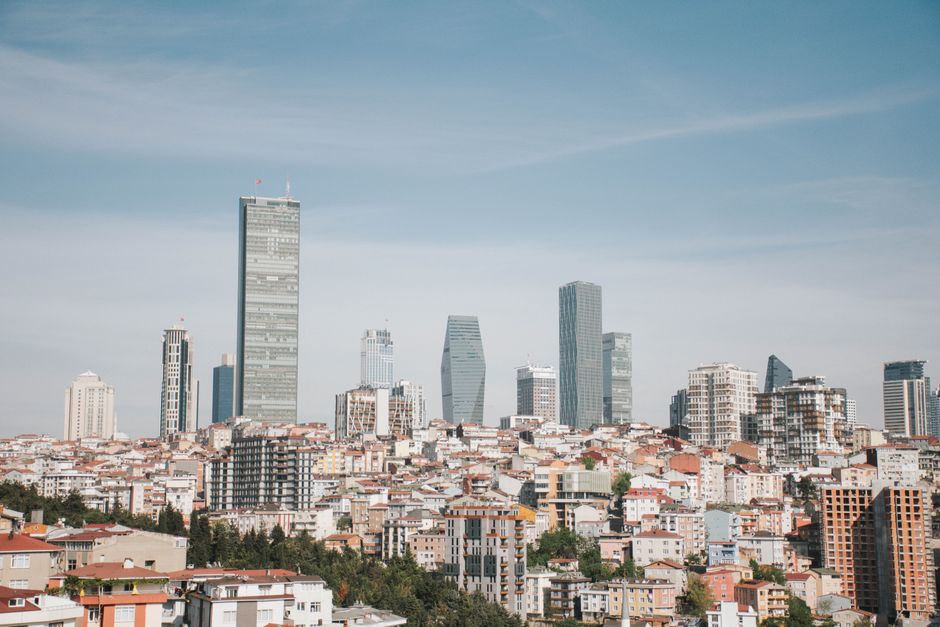
Istanbul's commercial property sector faces a critical inflection point as international political instability ripples through local office markets. The ongoing tensions between major powers, combined with currency fluctuations and investor caution, are creating a bifurcated landscape where prime real estate thrives while secondary markets struggle to attract tenants.
The premium office corridor stretching through Maslak and Levent—traditionally Istanbul's most sought-after business addresses—has remained relatively resilient. Grade-A office space commanding 35-45 USD per square metre annually continues to attract multinational corporations establishing regional headquarters. However, brokers report that decision-making timelines have lengthened considerably. Where foreign firms once committed to three-year leases, many are now negotiating flexible 18-month agreements with exit clauses tied to geopolitical developments.
"We're seeing companies adopt a wait-and-see posture," explains the sentiment among Istanbul's commercial real estate community. Tech firms and financial services companies—historically aggressive expansion players—have shifted focus toward Istanbul's established business districts rather than speculative new developments in areas like Pendik or Atasehir.
The ripple effects extend to secondary markets. Office developments in the Fikirtepe regeneration zone and along the Bosphorus shores have experienced delays as investors reassess risk profiles. Several projects initially targeting completion in 2026 now target 2027 or 2028, with developers citing both funding constraints and subdued tenant demand.
Currency volatility compounds these challenges. The Turkish lira's fluctuations against major currencies make long-term rental calculations unpredictable for international tenants. Several Fortune 500 companies have renegotiated contracts to include currency adjustment clauses, shifting financial risk onto landlords already operating on tighter margins.
Yet Istanbul's geographic and economic positioning continues attracting attention. The city's role as a bridge between European and Asian markets remains strategically valuable, particularly for firms seeking to diversify away from more volatile regions. Demand for office space in Besiktas—popular with media and creative agencies—remains steady, while Sultanahmet's boutique office conversions targeting smaller international firms show consistent leasing activity.
Local developers are responding strategically, emphasising flexibility and technology-enabled workspaces. High-efficiency, mixed-use properties with shorter lease terms are outperforming traditional long-term office portfolios. Some are reducing square-metre costs to remain competitive while waiting for investor sentiment to stabilise.
The consensus among Istanbul's property professionals is clear: the global environment will continue shaping local commercial real estate through 2026 and beyond. Companies that can adapt quickly will thrive; those requiring certainty may find themselves sidelined in an increasingly dynamic market.
This article was compiled by AI from the sources linked above and screened before publishing. See our editorial standards.
How does this story make you feel?
Spread the word
About this article
Published by The Daily Istanbul
Daily brief
Free, in your inbox before 7am. Weekdays.
More in Business