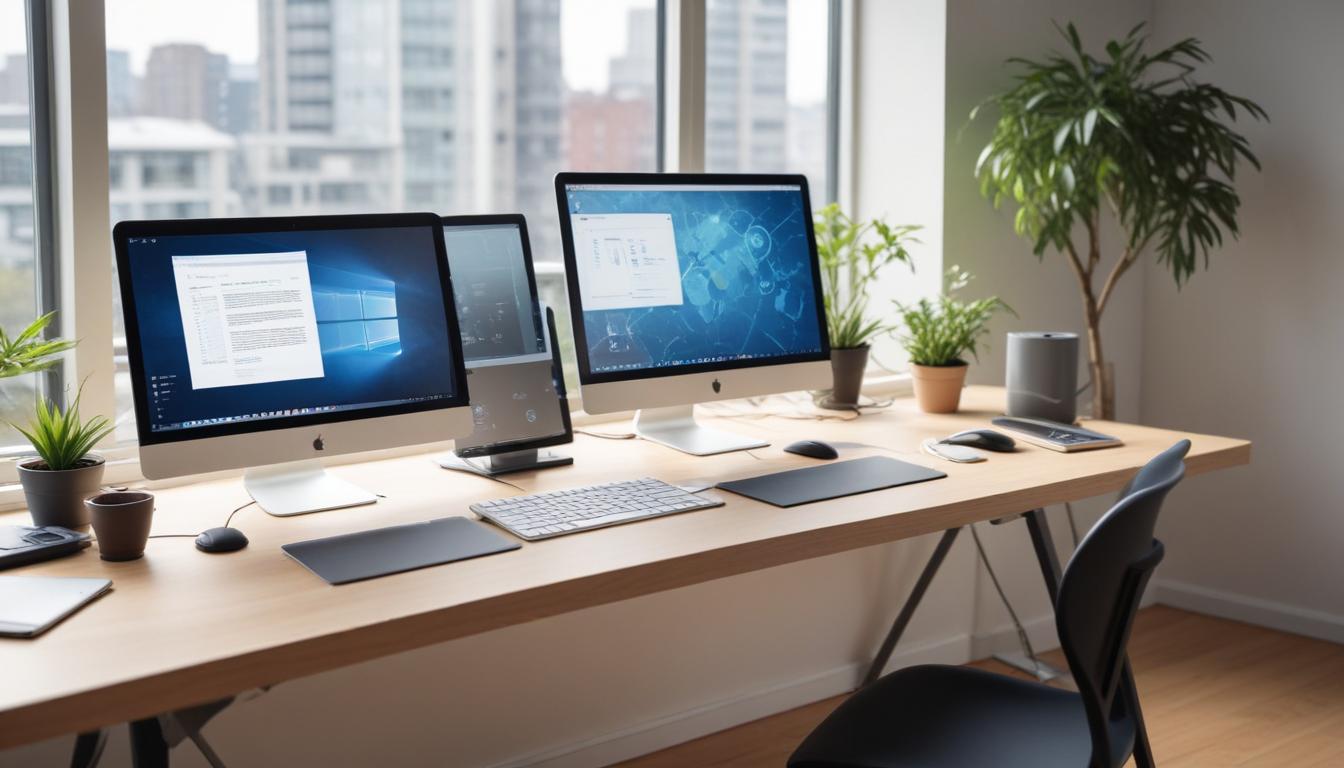
Istanbul's remote work revolution has a new protagonist. WorkFlow Istanbul, which quietly launched its flagship hub in the heart of Beyoğlu last month, is addressing a problem that has frustrated the city's growing digital nomad and distributed workforce community: the absence of intelligent, integrated workspace solutions.
The platform combines day-pass booking, community management, and resource allocation through a single app—a deceptively simple solution to a complex local problem. With office space in neighbourhoods like Karakoy commanding 150-200 Turkish lira per desk per day at legacy coworking operators, and demand for flexible workspace arrangements up 47% year-on-year across Istanbul, the timing feels prescient.
What sets WorkFlow apart is its focus on cross-border collaboration. The startup has established satellite hubs in Taksim, Galata, and Beşiktaş, each positioned to serve different professional communities. The Karakoy location, housed in a renovated Ottoman warehouse, has already attracted remote teams working across European and Middle Eastern time zones—a natural advantage for Istanbul's geographic position.
The innovation lies in the backend. WorkFlow's proprietary matching algorithm recommends compatible coworking spaces based on project requirements, industry clusters, and timezone overlap. A software developer in Barcelona collaborating with a design team in Dubai can book adjacent desks across WorkFlow's network without friction. For Istanbul-based remote workers, this opens access to properly equipped environments with reliable 500+ Mbps fibre connections—a persistent pain point in the city's patchwork commercial real estate market.
Financially, the company is working at sustainable margins. Day passes start at 120 lira; monthly memberships at 2,400 lira—roughly 30% below competing operators. They're targeting 3,000 active users across the network by year-end, with plans to expand into Ankara and Izmir by early 2027.
The broader context matters. Turkey's post-pandemic workforce has fundamentally shifted. Tech companies like Trendyol and Insider have embraced permanent hybrid models, creating demand for quality third spaces. Yet Istanbul's traditional coworking sector—dominated by legacy players focused on startup incubation—hasn't adapted quickly enough.
WorkFlow's entry suggests the market is ready for a platform that treats remote work not as a temporary phenomenon, but as the dominant paradigm. In a city where 340,000 people now work remotely at least three days weekly, according to a recent Istanbul Chamber of Commerce survey, that's a conversation worth joining.
This article was compiled by AI from the sources linked above and screened before publishing. See our editorial standards.