Meet Akdeniz Green Systems: The Istanbul Startup Turning Industrial Waste Into Renewable Energy
A Beyoğlu-based cleantech firm is scaling a breakthrough technology that could reshape how Turkey's manufacturing sector tackles emissions.
A Beyoğlu-based cleantech firm is scaling a breakthrough technology that could reshape how Turkey's manufacturing sector tackles emissions.
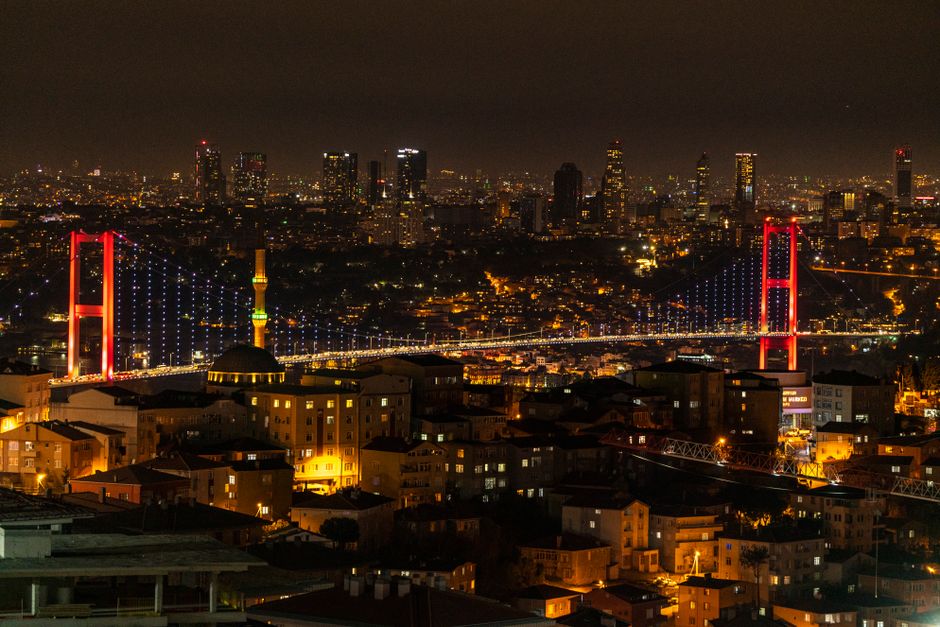
In a renovated warehouse overlooking the Golden Horn, engineers at Akdeniz Green Systems are quietly solving one of Turkey's thorniest environmental problems: what to do with the estimated 140 million tonnes of industrial waste the country generates annually.
Founded in 2024 by a team of Istanbul Technical University graduates, the company has developed a modular gasification system that converts non-recyclable waste into syngas—a fuel that can power factories, heat buildings, or feed into existing power grids. This month, they secured €3.2 million in Series A funding, positioning them as one of the most promising deep-tech players emerging from Turkey's sustainability sector.
The timing matters. Turkey's manufacturing heartland—particularly around Istanbul and the industrial zones of Gebze—faces mounting pressure to reduce carbon emissions ahead of stricter EU regulations affecting export competitiveness. The country's current waste-to-energy infrastructure handles less than 15 percent of industrial byproducts, leaving most destined for landfills or illegal dumping.
Akdeniz's solution is elegant in its simplicity. Their containerised units, roughly the size of a shipping container, can be deployed directly at manufacturing facilities in Zeytinburnu, Avcılar, or Başakşehir—eliminating costly transport while creating a closed-loop system. Early pilot data from a ceramics producer in Çerkezköy shows a 35 percent reduction in energy costs, with residual ash suitable for construction applications.
What sets the startup apart is localisation. Rather than importing turnkey solutions, they've engineered the system around Turkey's specific waste composition—particularly textile scraps, food processing residue, and packaging materials that dominate the industrial waste stream. The team has also established partnerships with Istanbul's municipality and ISKI (water authority) to explore waste-heat recovery for district heating in older neighbourhoods like Fatih and Eyüp.
The company is now piloting installations with three major Turkish manufacturers, with plans to deploy 12 units across the country by year-end. Revenue projections suggest profitability within 18 months, while the technology could eventually address 8-10 percent of Turkey's industrial waste problem—equivalent to preventing roughly 4 million tonnes of CO₂ annually.
For Istanbul's tech community, Akdeniz represents a broader shift: cleantech is moving from NGO advocacy into engineering-driven commercial solutions. As global supply chains increasingly demand carbon accountability, companies that can prove measurable emissions reductions aren't just building a better planet—they're building valuable businesses.
This article was compiled by AI and screened before publishing. See our editorial standards.
How does this story make you feel?
Spread the word
About this article
Published by The Daily Istanbul
Daily brief
Free, in your inbox before 7am. Weekdays.
More in tech