How Istanbul's Urban Archive Ended Up Full of Duplicate Images — and Why It Matters Now
Decades of fragmented municipal photography systems left the city's digital heritage record riddled with redundant files, and a reckoning is finally underway.
Decades of fragmented municipal photography systems left the city's digital heritage record riddled with redundant files, and a reckoning is finally underway.
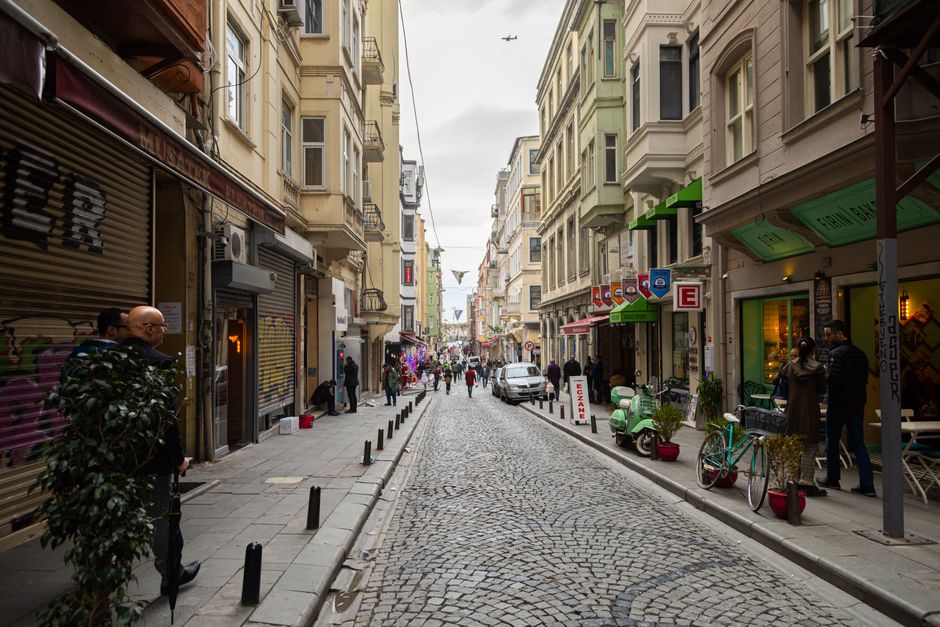
Istanbul's municipal image archive contains well over two million digital files. A significant portion of them are duplicates — the same photograph stored under different file names, across different servers, sometimes in different departments entirely. That is the working estimate being used by the Istanbul Metropolitan Municipality's digital infrastructure unit as it pushes through a long-overdue audit of its visual records, according to documents reviewed by The Daily Istanbul.
The problem did not arrive overnight. It accumulated across roughly 25 years of parallel and sometimes competing digitisation efforts, each launched by different administrations with different software standards and no shared taxonomy. Understanding how Istanbul got here requires going back to the late 1990s, when the municipality's various directorates — urban planning, heritage protection, public works — each began scanning and photographing their own project sites independently.
The core structural issue was institutional fragmentation. The Istanbul Metropolitan Municipality, which oversees a city of more than 15 million people, operates dozens of semi-autonomous directorates. The Directorate of Historic Environment and Cultural Heritage, headquartered near Sultanahmet, built its own photo library to document restoration work along the Theodosian Walls and in the Fatih district. The urban transformation office, which accelerated after the February 2023 Kahramanmaraş earthquakes forced renewed attention to Istanbul's seismic vulnerability, generated thousands of survey images of at-risk buildings in districts like Zeytinburnu and Bağcıoğlu. Neither system spoke to the other.
Third-party contractors made things worse. Between 2005 and 2019, municipal tenders for projects along the Bosphorus shoreline, including the contested waterfront developments near Arnavutköy and the Galataport terminal in Karaköy, each came with their own photographic documentation requirements. Contractors delivered image sets on external drives, in formats ranging from TIFF to low-resolution JPEG, with inconsistent metadata. Many files were ingested into municipal servers without deduplication checks. The same drone photograph of a construction site might exist in four folders simultaneously.
The political turbulence of the past several years deepened the dysfunction. The transition from the AKP-aligned administration to Ekrem İmamoğlu's CHP-led municipality after the March 2019 elections — and the subsequent legal battles over that result — meant that institutional continuity suffered. Staff rotations, access revocations, and disputes over server ownership between the metropolitan municipality and central government-linked agencies left gaps in the chain of custody for digital assets.
The current audit, which began formally in January 2026, is being coordinated through the municipality's Smart City Operations Centre on Davutpaşa Caddesi in Eyüpsultan. The centre, which went operational in late 2022, was originally built to manage traffic and emergency response data, but its processing capacity is now being redirected toward the image deduplication project during off-peak hours.
The practical stakes are considerable. Istanbul's earthquake preparedness programme, which requires up-to-date photographic surveys of approximately 90,000 buildings flagged as structurally vulnerable across 39 districts, depends on searchable, reliable visual records. When assessors pull duplicate or mislabelled images, field verification teams may be dispatched unnecessarily — wasting time and budget that the municipality, operating under sustained pressure from lira inflation, cannot easily spare.
The archive also feeds directly into heritage preservation decisions. The Fatih district alone contains dozens of Ottoman-era structures under active monitoring. Duplicate images filed under different project codes have, in at least one documented case, caused a restoration grant application to be assessed twice by the same committee, delaying a decision by nearly four months.
The deduplication effort is expected to run through the end of 2026. Officials are evaluating a hybrid approach: automated hash-matching software to flag identical files, followed by human review for near-duplicates where image content is the same but file metadata differs. Once the archive is cleaned, the municipality plans to adopt a single content management standard, compatible with the European Union's INSPIRE directive on spatial data infrastructure — relevant given Turkey's longstanding candidacy relationship with the EU and the practical need to share heritage data with bodies like UNESCO, which monitors Istanbul's historic peninsula as a World Heritage Site.
For residents and researchers trying to access municipal visual records through the Istanbul Metropolitan Municipality's open-data portal, the most immediate change will be simpler search results and fewer dead links. That sounds modest. Given where things stood, it represents a genuine reset.
How does this story make you feel?
Spread the word
About this article
Published by The Daily Istanbul
Daily brief
Free, in your inbox before 7am. Weekdays.
More in News