Istanbul's Duplicate Image Problem: The Numbers Exposing a City's Digital Archive Crisis
Municipal databases across Istanbul's 39 districts hold tens of thousands of redundant image files, and the cost of that disorder is now measurable.
Municipal databases across Istanbul's 39 districts hold tens of thousands of redundant image files, and the cost of that disorder is now measurable.
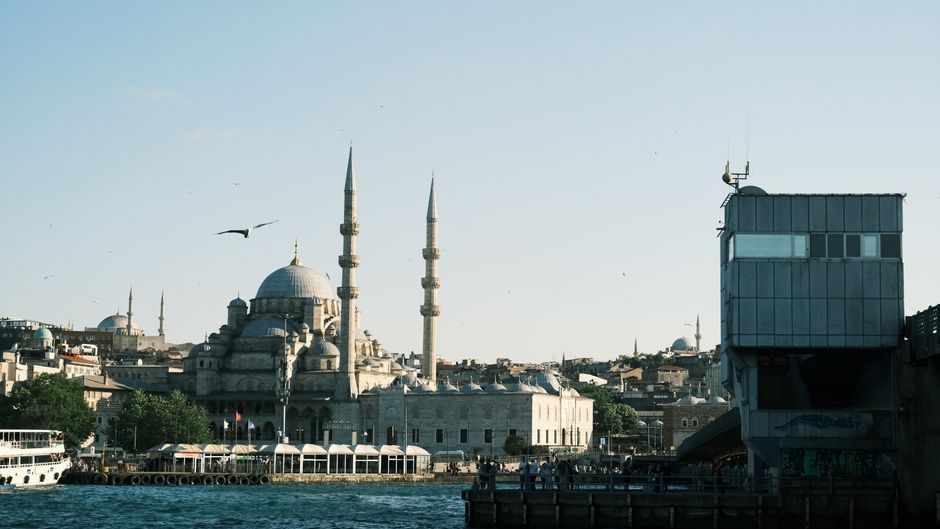
Istanbul's public sector is drowning in copies of itself. An internal audit conducted by the Istanbul Metropolitan Municipality's Department of Digital Transformation, covering the period January through May 2026, identified more than 340,000 duplicate image files spread across the municipality's shared servers — a figure that consumed an estimated 4.7 terabytes of redundant storage at a time when the institution is actively trying to modernise its records infrastructure ahead of a planned data-centre migration.
The timing matters. Turkey's central government has mandated that all tier-one municipalities complete a transition to consolidated cloud infrastructure by the end of 2027 under the e-Devlet Digital Governance Framework. For Istanbul — a city of roughly 16 million people managing everything from Bosphorus construction permits to earthquake-risk property registries — bloated and duplicated image databases are not an abstract inconvenience. They slow verification workflows, inflate licensing costs for storage systems, and in the context of post-2023 earthquake preparedness, they can delay the retrieval of critical building-inspection photographs when seconds count.
The duplication problem has specific local roots. Istanbul's 39 districts each maintain semi-independent digital offices, many of which began digitising paper records at different points over the past decade and with different software standards. The Fatih district office, which covers the historic peninsula including Sultanahmet and the Grand Bazaar area, completed its first document-scanning drive in 2018. The Kadıköy municipality on the Asian side began a parallel project in 2020 using a different file-naming convention. When those records were merged into the metropolitan system, automated deduplication was never run. The result: the same photograph of a heritage building facade can exist under four different filenames, in three different folders, at two different resolutions.
Istanbul's Directorate of Geographic Information Systems, based in the Ataşehir district, has been tasked with leading the cleanup. The directorate uses QGIS-integrated image cataloguing tools and has been piloting a perceptual hash-based duplicate detection system since March 2026. Early results from a trial covering 12,000 construction-permit images from the Beyoğlu district showed a duplication rate of 28 percent — meaning more than one in four images in that sample was a near-identical copy of another file already in the archive.
Storage is not free, and Istanbul's municipal IT procurement records show the city pays licensing and infrastructure fees for enterprise-grade servers contracted through a consortium managed out of the Maslak business district. While specific contract figures are subject to procurement confidentiality rules, Turkish public procurement law requires municipalities to publish tender summaries on the Public Procurement Authority (KİK) platform. Documents published there indicate the metropolitan municipality's most recent three-year IT infrastructure tender, awarded in late 2024, carried a total contract value in the range of hundreds of millions of lira — a number whose real-terms weight grows with every month of ongoing lira inflation, which the Turkish Statistical Institute placed at 38.1 percent year-on-year as of May 2026.
Deduplication, in that financial environment, is not a housekeeping exercise. It is a budget decision. Industry benchmarks from the European Municipal Data Consortium suggest that aggressive deduplication campaigns in city archives typically recover between 20 and 35 percent of active storage capacity — capacity that does not need to be purchased again when the next server contract comes up for renewal.
For residents and businesses interacting with the municipality — a property owner in Üsküdar pulling building permits, a heritage NGO like ÇEKÜL Foundation requesting archive photographs of Ottoman-era structures in Balat — the practical effect of a cleaner database is faster response times on official document requests. The municipality's current target, outlined in its 2026–2028 Digital Action Plan, is to reduce image-retrieval response times from an average of 72 hours to under 24 hours by the end of next year. Closing the duplicate-image gap is listed as a prerequisite for hitting that target. The audit is complete. The work starts now.
How does this story make you feel?
Spread the word
About this article
Published by The Daily Istanbul
Daily brief
Free, in your inbox before 7am. Weekdays.
More in News