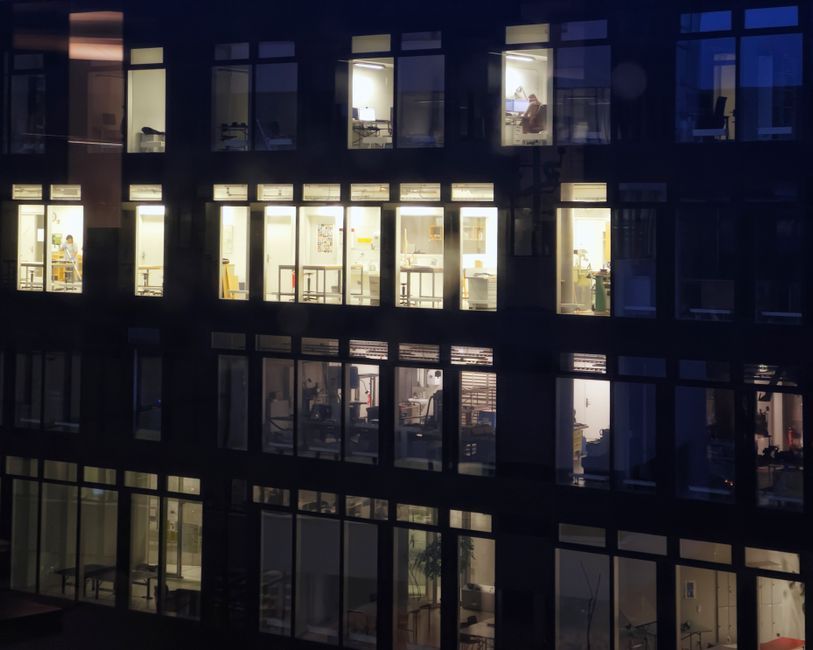
Istanbul's commercial property market absorbed roughly 380,000 square metres of new office space in 2025, and the wave hasn't crested. Developers and landlords report that vacancy rates in the Levent–Maslak corridor on the European side have dropped below 8 percent for Grade A stock — a threshold not seen since before the pandemic — while Ataşehir on the Anatolian side is quietly closing the gap, with several towers along the TEM highway now quoting rents above 650 Turkish lira per square metre per month.
The timing matters. Turkey's economy is grinding through a difficult disinflation cycle, and companies are making long-term real estate commitments at exactly the moment they need to compete hardest for skilled workers. The office, once written off as an anachronism after the remote-work years, has come back as a recruitment tool. Where a company plants its headquarters increasingly determines which candidates it can attract — and keep.
The Neighbourhood Premium
Maslak remains the address of choice for multinational financial services firms. The İş Kuleleri complex on Büyükdere Caddesi is fully leased, and at least three technology companies signed pre-lease agreements in the first quarter of 2026 for space in developments still under construction nearby. That pressure has sent HR teams back to basics: proximity to metro lines, parking ratios, and the density of lunch options within a ten-minute walk have all become explicit items in employee surveys that recruiters now hand to property advisors.
Ataşehir tells a different story. The Nidakule office cluster near Bağdat Caddesi has attracted a cluster of Istanbul-based fintech firms and regional headquarters of European logistics companies since 2023. The pitch to talent there is lower commute times for the large professional class living along the Asian shore, from Kadıköy to Maltepe. One Istanbul-based relocation consultancy tracked 2024 data showing that employees commuting to Ataşehir offices spent an average of 38 minutes less per day in transit than colleagues heading to Levent — a figure that resonates sharply with candidates in their 30s weighing job offers.
What Employers Are Actually Doing Differently
The knock-on effect on hiring is concrete. Several Istanbul recruitment agencies, including Michael Page Turkey and Robert Walters Istanbul, have reported that job postings for mid-to-senior roles now routinely specify the office district alongside the job title. Candidates are filtering searches by location before salary in some sectors, particularly in technology and professional services. One regional head of a global consulting firm told The Daily Istanbul that the firm's Şişli office was struggling to fill analyst roles until it relocated to a Maslak tower with a direct metro connection in late 2024 — after which time-to-hire dropped by nearly three weeks on average.
Flexible workspace operators are capitalising on the gap between what large tenants want and what smaller firms can afford. Kolektif House, which runs co-working locations across Istanbul including sites in Karaköy and Levent, expanded its total capacity by 15 percent in early 2026, betting that startups priced out of Grade A towers will pay a premium for a prestigious postal district without a long-term lease. The model also suits the growing number of remote-first companies that need a physical address in Istanbul to recruit locally but don't need 2,000 square metres of their own.
The practical calculus for employers is becoming clearer: office location is now a line item in the talent budget, not just the facilities budget. Companies planning lease renewals or relocations in the next 18 months would do well to run staff surveys before signing anything. The Metrobus corridor, the M7 metro line extension toward Kabataş, and the planned Gayrettepe–Istanbul Airport rail link are all reshaping commute maps — and the neighbourhoods that sit on those routes are already seeing speculative office development. Firms that secure space near future transit nodes now are likely to find themselves in a stronger hiring position by 2028, when the next generation of Istanbul professionals enters the market.