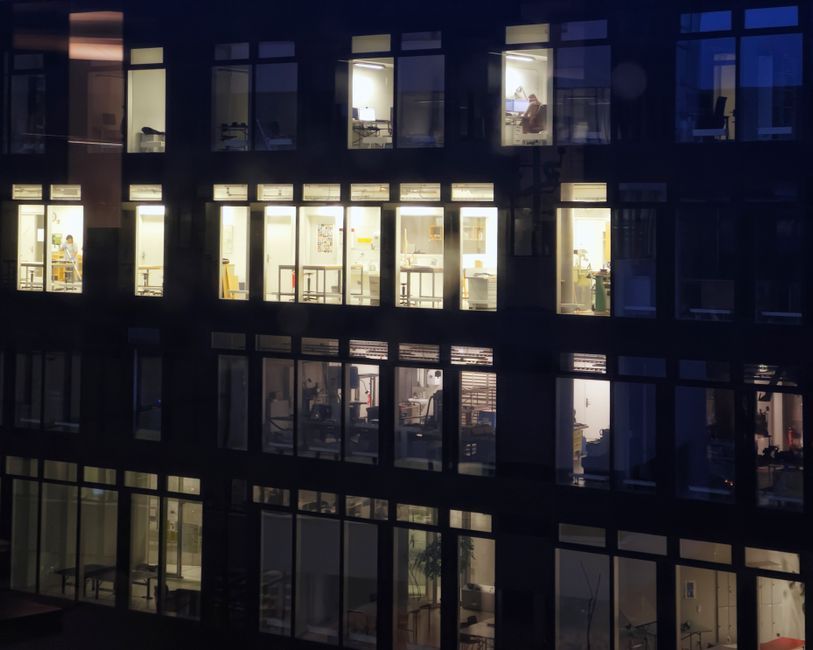
Istanbul added roughly 340,000 formal-sector jobs in the first five months of 2026, according to figures published by the Turkish Statistical Institute in June, with the largest gains concentrated in hospitality, logistics, and software development. The numbers mask a fault line running through the city's labour market: employers in Maslak and Ataşehir's glass-tower office districts are hunting for bilingual tech workers and paying salaries denominated in dollars or euros, while the traditional retail and manufacturing belts around Bağcılar and Esenyurt struggle to fill shifts at wages eroded by inflation still hovering above 50 percent year-on-year.
The timing matters. Iran is burying its supreme leader this week, Russia is dealing with domestic fuel shortages and a grinding war, and Poland's prime minister is warning of critical months ahead on his country's eastern flank. For Istanbul, perched at the intersection of all that turbulence, geopolitical disruption is not background noise — it is a direct input into the city's talent economy. Capital and skilled professionals displaced from Kyiv, Moscow, Tehran, and Beirut have been washing into the city for four years now, and the composition of that inflow is changing the kind of jobs being advertised on Kariyer.net and LinkedIn Turkey.
The Neighbourhood Divide
Walk from Levent Metro to the Sabancı Center on Büyükdere Caddesi on a Tuesday morning and the recruitment banners are hard to miss. Fintech startups, European logistics firms, and gaming studios have planted themselves in the office towers there, competing for engineers with five-plus years of experience in Python or Rust. Signing bonuses of 50,000 Turkish lira — roughly $1,400 at current exchange rates — are becoming routine for senior developer roles. Relocation packages for candidates arriving from abroad are even more generous.
Cross the Bosphorus to the Asian side and the picture shifts. The Kadıköy and Ümraniye corridor has developed a secondary cluster of mid-tier companies — mostly e-commerce operations and call centres serving the Middle East and North Africa markets — that are offering starting salaries of around 22,000 to 28,000 lira per month for Arabic- or Farsi-speaking customer service agents. Demand for those language skills has spiked this year. The İŞKUR public employment agency's Istanbul branch recorded a 38 percent year-on-year increase in job postings requiring Arabic proficiency between January and May 2026, a figure its own analysts link directly to the collapse of stable business environments across the Arab world.
Istanbul Technical University's career office reported in a May briefing that engineering graduates who accepted positions at multinational employers in Maslak were earning starting packages roughly 2.4 times higher than peers who joined domestic manufacturing firms — the widest gap the office has recorded since it began tracking the data in 2018. That divergence is accelerating brain drain from the city's mid-market employers, who cannot compete on pay but are experimenting with four-day work weeks and remote-first contracts to hold on to staff.
What Employers Are Doing About It
Several large employers are not waiting for the market to rebalance on its own. Turkcell launched a reskilling programme in April targeting 2,000 employees at its Maltepe campus, focusing on cloud architecture and cybersecurity certifications, aiming to convert existing staff rather than poach from the open market. The programme runs through December 2026. Separately, the Istanbul Chamber of Commerce has been running a subsidised apprenticeship scheme — Ticaret Odası Yetenek Köprüsü — that pairs vocational school leavers from districts like Sultangazi with employers in the city's logistics sector, placing around 900 trainees since the scheme's February launch.
For workers trying to navigate all this, the practical advice from recruiters at firms like Adecco Turkey and Michael Page Istanbul is consistent: language skills and digital credentials travel across the salary divide in ways that traditional vocational qualifications do not. A warehouse supervisor who can also manage an ERP dashboard is a different proposition from one who cannot. The gap between those two workers, in 2026 Istanbul, is roughly 12,000 lira a month — and widening.